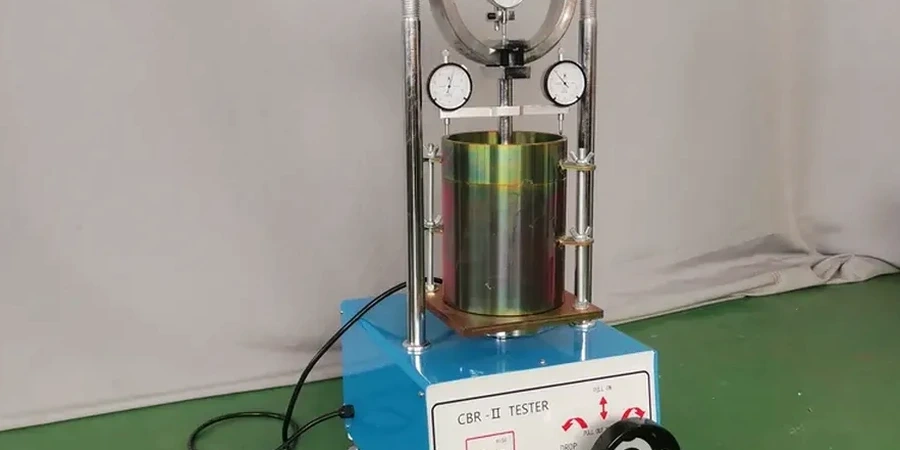
The geology flips completely between north and south Cambridge. Castle Hill sits on Lower Chalk overlain by thin glacial till, while the area around Addenbrooke’s Hospital rests on Gault clay and river terrace gravels. That difference alone can swing a laboratory CBR value from 3% to over 20% on the same project. We see it constantly when samples arrive from residential extensions in Chesterton versus commercial builds near the Biomedical Campus. Our lab runs the California Bearing Ratio test under BS 1377-4 on samples you deliver or we coordinate collection of. The soaking procedure follows BS EN 1997-2 guidelines for worst-case moisture conditions. Before we even start the CBR, we often recommend a grain-size analysis to confirm the fines content that governs swelling potential during the four-day soak.
A CBR value without a documented soaking history tells you nothing about how that subgrade will behave in a Cambridge winter.