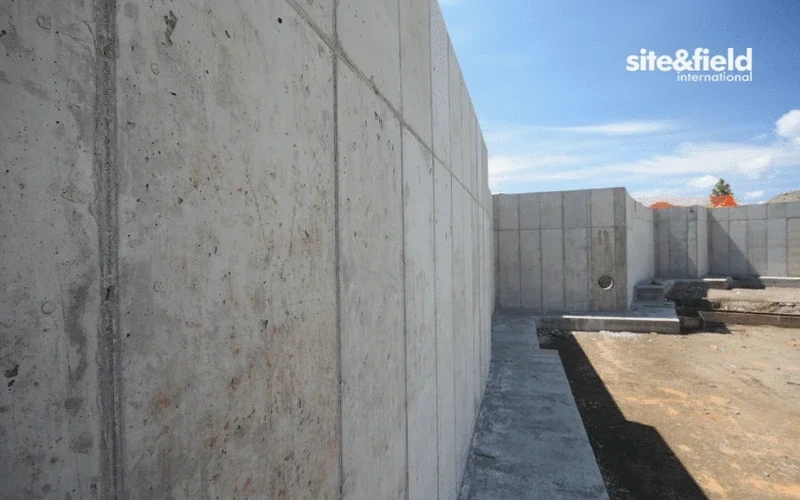
We recently reviewed a basement excavation off Hills Road where a contractor had proposed a standard cantilever wall directly into the stiff, fissured Gault Clay. On paper, it looked fine. In reality, the seasonal groundwater perched in the overlying river gravels had been completely overlooked. Within a week of digging, the face was weeping and the temporary support started to rotate. That is the reality of retaining wall design in Cambridge: you are not just holding back soil, you are managing a sensitive hydrogeological system. The British Geological Survey logs for this area, centred around 52.2055°N, consistently show a layered sequence of West Melbury Marly Chalk over Gault, capped with sands and gravels that act as a shallow aquifer. Any design that ignores that perched water table will fail, regardless of how conservative the structural section looks. Before we even touch a calculation, we correlate site investigation data from CPT testing with the local stratigraphy to pinpoint exactly where the pore pressures will build.
In Cambridge's layered geology, a retaining wall doesn't just hold earth—it controls a perched groundwater system that changes with every season.