GEOTECHNICAL ENGINEERING1
CAMBRIDGE
HomeGround improvementStone column design

Stone Column Design in Cambridge: Ground Improvement for Weak Soils

Evidence-based design. Reliable delivery.

LEARN MORE

Cambridge’s historic college courts and modern research parks share a hidden challenge: the ground beneath them. Much of the city sits on the River Cam’s floodplain, where soft alluvial clays and pockets of peat extend to significant depths. The urban expansion of the last century—from Victorian terraces near Mill Road to the biomedical campus at Addenbrooke’s—consistently pushes construction onto these compressible soils. Stone column design emerged as a reliable ground improvement technique here because it reinforces the weak strata without the need for deep excavation and muck-away. For structures where settlement control is critical, the method works by creating stiff, load-bearing columns of compacted gravel within the soft matrix. A site-specific design that accounts for Cambridge’s variable Holocene deposits transforms otherwise marginal land into buildable ground, as the gravel columns both densify the surrounding soil and provide a direct load path to more competent layers.

In Cambridge’s floodplain alluvium, a properly designed stone column grid can halve the settlement time while tripling the bearing capacity of the untreated ground.
Our service areas

How we work

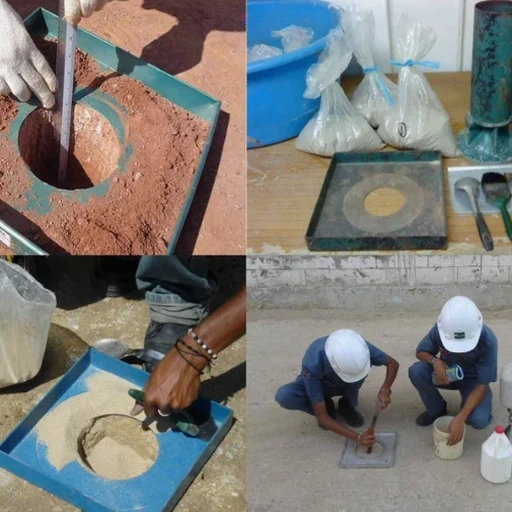
On sites near the Backs or out towards Fen Ditton, you frequently encounter a layer of desiccated clay crust that masks much softer material underneath. A design that looks fine on paper can fail during installation if this crust isn’t properly characterised. The key to effective stone column design in Cambridge is understanding that the undrained shear strength of the Gault Clay and overlying alluvium can shift dramatically within a few metres laterally. Our approach leans heavily on pre-design site investigation, often pairing borehole data with an in-situ permeability test to confirm drainage conditions before column spacing is finalised. The design itself follows BS EN 1997-1:2004, using either the Priebe method or unit cell finite element analysis to predict settlement reduction. Column diameters typically range from 0.6 to 1.2 metres, installed by vibro-displacement to minimise spoil. A well-designed scheme in Cambridge doesn’t just reduce total settlement—it accelerates consolidation, cutting months off the post-construction period which matters enormously on tight academic or commercial fit-out schedules.
Stone Column Design in Cambridge: Ground Improvement for Weak Soils
Technical reference — Cambridge

Local considerations

Cambridge’s population has grown past 145,000, and with the new Cambridge South station and continuing expansion of the biomedical campus, development pressure on brownfield and riverside plots has never been higher. The city sits at roughly 6 metres above ordnance datum, but the ground profile tells a more complicated story. Peat lenses and soft silty clays can extend 4 to 8 metres below ground level before hitting the stiffer Gault Clay. Skipping a proper stone column design on these soils invites differential settlement that cracks masonry and misaligns sensitive lab equipment. There’s also the vibration risk: Cambridge’s ancient college chapels and listed buildings are extremely susceptible to ground-borne vibration during column installation. A design that doesn’t specify vibration monitoring and setback distances from sensitive structures is a liability. The river terrace gravels, where present, can also cause refusal problems if the vibroflot encounters them unexpectedly—requiring pre-drilling or a switch to a different installation technique mid-project.

Need a geotechnical assessment?

Reply within 24h.

Email: contact@geotechnical-engineering1.com

Watch the video

Regulatory framework

BS EN 1997-1:2004 Geotechnical design — General rules, BS EN 1997-2:2007 Ground investigation and testing, BS 5930:2015 Code of practice for ground investigations, BRE BR 391 Specifying vibro stone columns

Typical values

ParameterTypical value
Typical column diameter (vibro-displacement)0.6–1.2 m
Area replacement ratio (ar)10–35%
Design methodPriebe / unit cell FEA
Target undrained shear strength (treated)> 40 kPa
Settlement reduction factor (n)1.5–4.0
Vibration monitoring threshold (PPV)< 5 mm/s at 10 m
Load transfer platform thickness0.3–1.0 m

Questions and answers

What does stone column design cost for a typical Cambridge residential plot?

For a small to medium residential project in Cambridge, design fees typically range from £1,180 to £3,900 depending on the complexity of the ground profile and the number of columns required. A straightforward scheme on relatively uniform alluvium sits at the lower end, while sites with peat layers or proximity to listed structures that demand detailed vibration assessments fall at the upper end.

How do stone columns perform in Cambridge’s peat and soft clay?

Performance depends heavily on the confinement provided by the surrounding soil. In very soft clays with undrained shear strength below 15 kPa, stone columns may not develop sufficient lateral support and can bulge excessively under load. In Cambridge’s typical profile—where the soft layers sit beneath a stiffer desiccated crust—columns work well because the upper crust provides confinement while the columns transfer load through the weaker zone. For peat layers thicker than about 1.5 metres, we often recommend a load transfer platform and closer column spacing, and we model the peat’s secondary compression separately to check long-term settlement.

Can stone columns be installed near Cambridge’s historic college buildings?

Yes, but with strict controls. The vibro-displacement method generates ground-borne vibration that can damage fragile masonry and stained glass. We specify vibration monitoring at the nearest sensitive receptor, typically setting a peak particle velocity limit of 3–5 mm/s. If the design requires columns within 15 metres of a listed structure, we often switch to a low-vibration installation technique or increase the setback distance and compensate with a stiffer load transfer platform. A condition survey of the building before works start is essential.

Location and service area

We serve projects in Cambridge and surrounding areas. More info.

View larger map