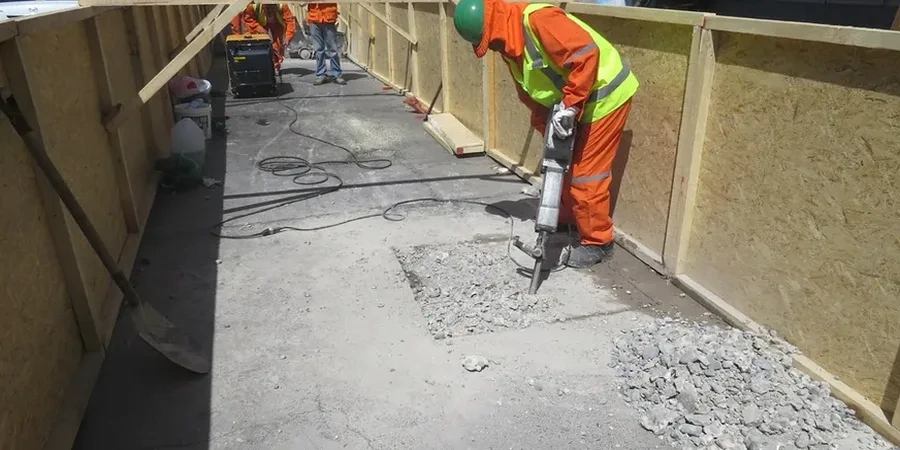
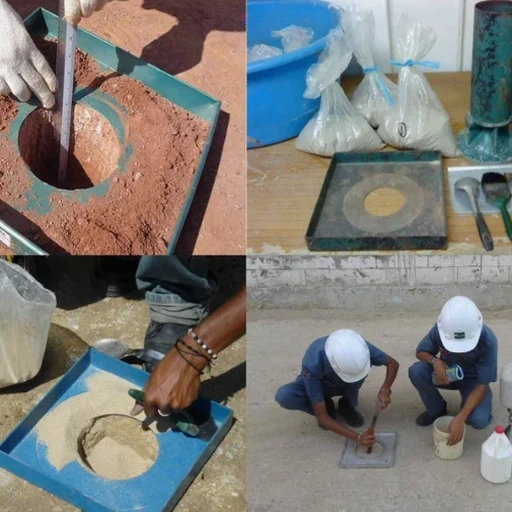
Cambridge sits on a deceptive geological boundary. North of the Cam, the Lower Chalk provides a competent bearing stratum that tempts engineers into standard pavement sections. South and east of the city centre, however, the Gault Formation—a stiff, overconsolidated clay—dominates, and it is here that rigid pavement design must confront the clay's seasonal volume change potential. BS 5930:2015+A1:2020 and BS EN 1997-2:2007 require a ground investigation that captures both the short-term modulus of the subgrade and its long-term equilibrium moisture condition, because a concrete slab jointed to handle only traffic loading will fail prematurely if the clay beneath heaves during a wet winter or shrinks in a dry summer. Our laboratory, accredited to ISO 17025, processes the triaxial and consolidation tests that feed directly into the analytical pavement models used by the project's structural engineer, and we routinely combine this with in-situ permeability testing when drainage layers form part of the pavement section near low-lying areas like Coldham's Common.
Joint performance in Cambridge's rigid pavements is governed less by the concrete mix than by the subgrade's seasonal stiffness ratio—something only site-specific investigation can quantify.