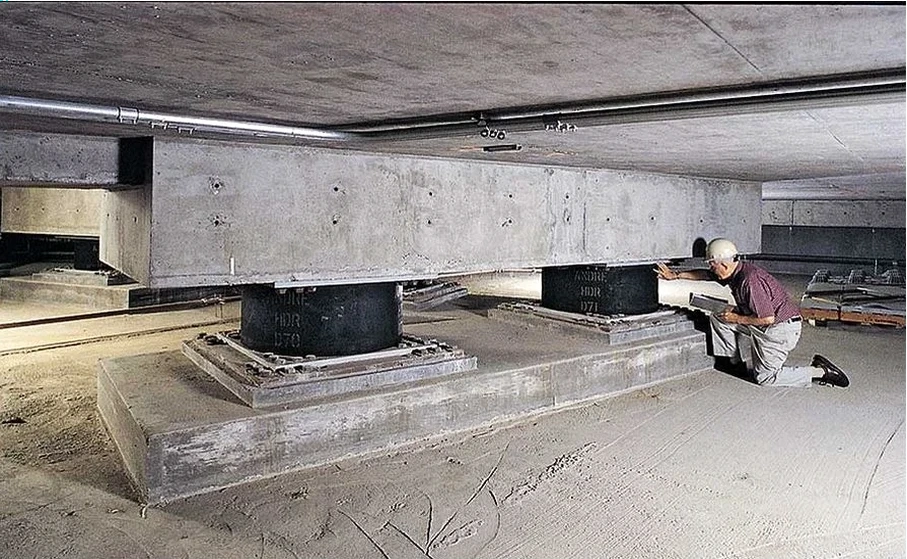
Working with structures in Cambridge means thinking about ground conditions that are anything but consistent. The city sits on the edge of the Fens, where the underlying Gault Clay and Chalk are overlain by river terrace gravels and, closer to the Cam, thick bands of alluvium and peat. In our experience, the real challenge for base isolation seismic design here isn't just about selecting the right elastomeric bearings or sliding isolators—it's about reconciling the site-specific ground investigation data with the isolator performance parameters. A CPT test across a site near Chesterton often reveals a completely different stiffness profile than one just half a mile south near Trumpington. That variability matters when you're tuning the isolation period to avoid resonance with the superstructure. We've seen too many preliminary designs where the isolator properties are chosen from a textbook without ever looking at the actual shear wave velocity profile of the site, and that's a mistake that's expensive to correct later. A proper seismic microzonation exercise, even for a single building footprint, helps avoid that trap by mapping the dynamic response across the entire plot.
A well-tuned base isolation system in Cambridge's alluvial soils can reduce the seismic demand on the superstructure by 60 to 80 percent, but only if the ground investigation captures the true dynamic stiffness of the founding stratum.