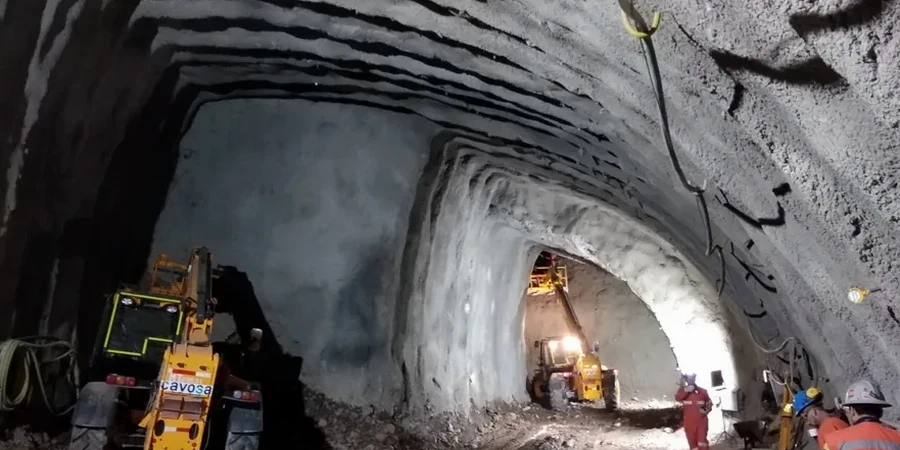
Beneath the historic colleges and narrow streets of Cambridge, the ground profile is dominated by the Gault Clay and overlying river terrace gravels, with groundwater often perched within the granular deposits. For any tunnelling project in Cambridge, the transition between these stiff overconsolidated clays and the looser alluvial silts presents a significant challenge, as the face pressure must be carefully balanced to prevent blowout at shallow depths. Our team applies laboratory triaxial testing and field-derived stiffness degradation curves to characterise the soft soil behaviour that governs tunnel stability in this city. When projects involve a detailed CPT test through the West Melbury Marly Chalk, we correlate the cone tip resistance with undrained shear strength to refine the alignment design. For schemes near the River Cam, where the base of the gravel acts as a confined aquifer, the analysis must also account for seepage forces acting on the tunnel face during excavation.
In Cambridge, the overconsolidated Gault Clay demands a K0 value often exceeding 2.0, a condition that fundamentally governs the short-term stability of shallow soft ground tunnels.