GEOTECHNICAL ENGINEERING1
CAMBRIDGE
HomeInvestigationSPT (Standard Penetration Test)

SPT Testing in Cambridge: Reliable Ground Data for Your Project

Evidence-based design. Reliable delivery.

LEARN MORE

The biggest mistake we see on Cambridge sites is assuming the Gault Clay is uniform. It is not. You hit a layer of river gravels from the Cam's old floodplain, and suddenly your open-drive sampler jams, the SPT refusal depth shifts, and your foundation design basis collapses. Our team runs SPT tests daily across Cambridge, from Chesterton to Trumpington, and we know the local ground profile intimately. We calibrate hammer energy to BS EN ISO 22476-3 and log every 75 mm of penetration so you get N-values you can trust, not numbers that look good on a spreadsheet. This is hands-on site investigation work, supported by a UKAS-accredited lab for follow-up grain size analysis when you need to confirm the fines content of those alluvial silts.

An SPT N-value without a corrected energy ratio is just a number. We apply ERi/60% corrections so your geotechnical designer works with real data, not wishful thinking.
Our service areas

How we work

The soil contrast between the historic city centre and the new developments around Eddington is stark. Near King's College, you are often working over dense, overconsolidated Gault Clay with N-values exceeding 40 below 5 metres. Out at Eddington, the Made Ground over chalk marl can give wildly variable SPT results: N=8 in a soft pocket, then refusal on a chalk lump two metres away. This is where experience matters. Our crew logs the split-spoon sample recovery ratio and any signs of chalk dissolution features on the spot. For deep basement excavations in the city, we often pair SPT with shear vane testing to capture the undrained strength profile without gaps. On greenfield sites near the M11, we recommend supplementing SPT data with plate load tests to validate bearing capacity assumptions directly beneath pad footings.
SPT Testing in Cambridge: Reliable Ground Data for Your Project
Technical reference — Cambridge

Local considerations

Cambridge sits on the northern edge of the London Basin, where the chalk aquifer is vulnerable to artesian conditions in certain buried channel features. If you drill into a sand lens within the Lowestoft Till without recording the water strike depth, you can misjudge the effective stress and overestimate SPT blow counts. We have encountered this in the Cherry Hinton area, where a dry borehole at 6 metres suddenly became a flowing well at 9 metres. Our drillers are trained to log water strikes and stabilise the hole with temporary casing before continuing the SPT sequence. We also check for the presence of peat and organic silts in the shallow floodplain deposits east of the Cam. These compressible layers can produce deceptively low SPT values and must be identified early to avoid differential settlement problems.

Need a geotechnical assessment?

Reply within 24h.

Email: contact@geotechnical-engineering1.com

Regulatory framework

BS 5930:2015+A1:2020, BS EN ISO 22476-3:2005+A1:2011, Eurocode 7: BS EN 1997-2:2007

Typical values

ParameterTypical value
StandardBS EN ISO 22476-3:2005+A1:2011
Hammer typeAutomatic trip hammer (energy calibrated)
Rod energy ratio (ERi)Measured per rig, typically 70–85%
SamplerStandard split-spoon (BS 5930 type)
Penetration increment150 mm (three 75 mm seating + test drives)
Typical depth range1.5 m to 30 m (depending on rig access)
Reporting outputN60, N1(60) corrected, soil description log

Questions and answers

What is the typical cost of an SPT test in Cambridge?

For a standard SPT borehole in the Cambridge area, you should budget between £370 and £640 per test location, depending on depth, access constraints, and whether we need to mobilise a cable percussion or window sampling rig. This includes the driller, technician, calibrated automatic hammer, and a factual report with corrected N60 values and soil descriptions.

How do you correct SPT N-values for the Cambridge geology?

We apply the full correction chain from BS EN ISO 22476-3: overburden pressure (CN), rod energy ratio (ERi/60%), rod length, and borehole diameter. For the Gault Clay, we also report the sampler recovery ratio because low recovery can indicate fissured or softened zones that affect the N-value interpretation.

Can you do SPT testing inside existing buildings?

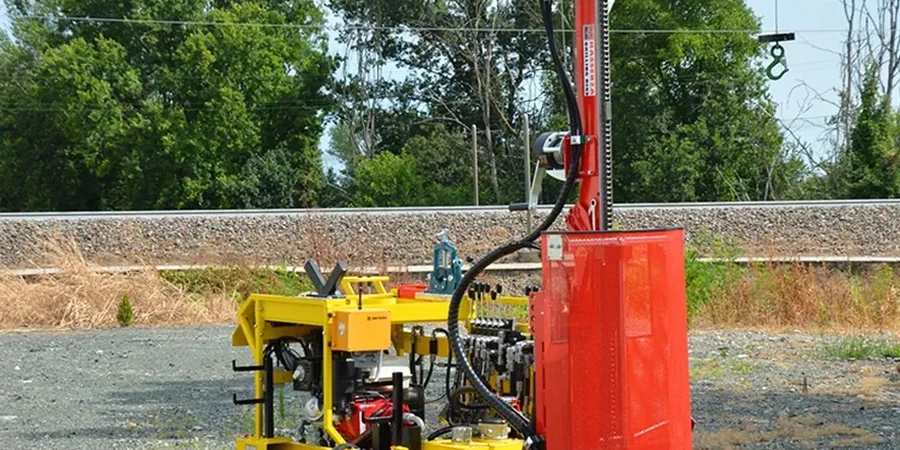
Yes, using a compact window sampling rig with a folding mast. We have tested inside basements, under low headroom, and in courtyards with narrow access. We need a minimum width of about 800 mm and a clear height of 2.5 metres. The rig runs on rubber tracks and we lay ground protection mats.

How do you handle groundwater during SPT drilling in Cambridge?

We log the water strike depth during drilling and measure the stabilised water level after 20 minutes. If artesian conditions are encountered, we extend the temporary casing to seal off the aquifer and prevent blowout. For standard monitoring, we install a standpipe piezometer in the completed borehole so you can track groundwater fluctuations over time.

Location and service area

We serve projects in Cambridge and surrounding areas.

View larger map