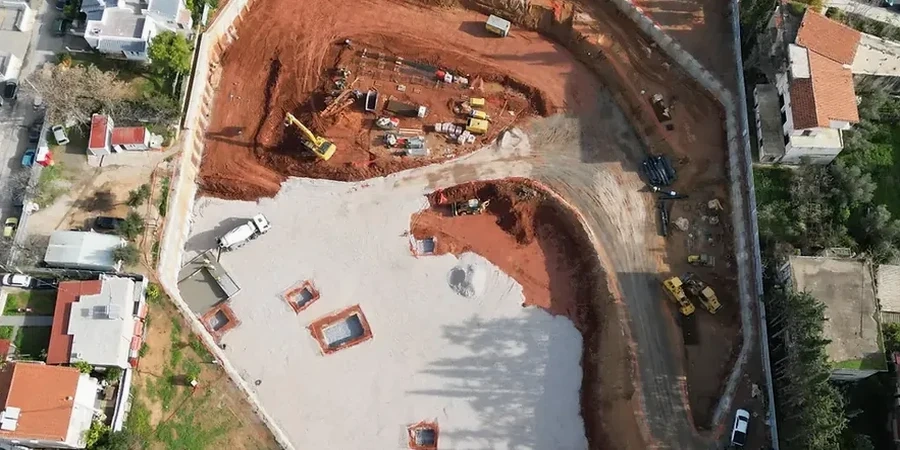
Cambridge sits on the Gault Clay formation, a stiff, overconsolidated clay that behaves well in the short term but demands careful assessment of long-term pore pressure equalisation. Add the River Cam’s alluvial gravels and a high water table near historic college basements, and you get a site where generic excavation support won’t work. Our team designs embedded retaining walls, propping systems, and base stability solutions calibrated to local geology and the constraints of working next to listed structures. Before mobilising plant, we often run an SPT drilling campaign to map the clay–gravel interface and confirm undrained shear strength with depth.
In Cambridge, the biggest risk in deep excavations is not collapse during digging — it’s long-term swelling of Gault Clay that lifts the slab years after construction.