GEOTECHNICAL ENGINEERING1
CAMBRIDGE
HomeSlopes & WallsSlope stability analysis

Slope Stability Analysis in Cambridge

Evidence-based design. Reliable delivery.

LEARN MORE

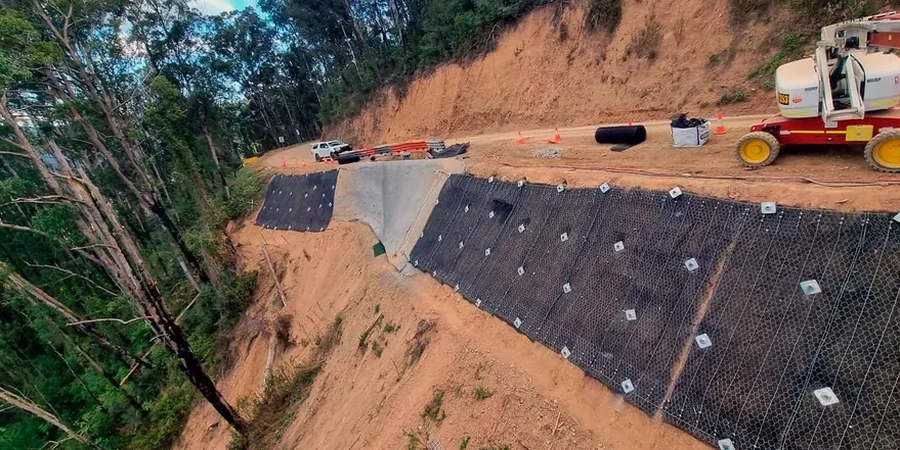
Cambridge sits barely 6 metres above sea level on the River Cam's floodplain. That low elevation fools many into thinking slope failures are not a local concern. They are. The Gault Clay Formation underlies much of the city and its behaviour changes dramatically with seasonal saturation. A 2022 Cambridgeshire County Council infrastructure assessment flagged twenty-three embankment sections along guided busways and former railway cuttings with marginal stability scores. We provide slope stability analysis that interprets the geological transitions from river gravels into the deeper Ampthill and Kimmeridge Clays. The work informs planning applications, retaining wall designs, and cut-and-fill sequences for basement excavations near the historic colleges. Every assessment references BS 5930:2015 field descriptions and BS EN 1997-1:2004 design approach DA1.

The Gault Clay–chalk interface governs slope stability across Cambridge—ignore that horizon and the factor of safety becomes meaningless.
Our service areas

How we work

In Cambridge, the critical horizon sits right where the West Melbury Marly Chalk transitions into the underlying Gault Clay. That interface—often between 4 and 9 metres depth—acts as a preferential slip plane when pore pressures rise after heavy winter rain. We log the discontinuity spacing and infill material directly from recovered cores. Test pits let us map the weathered profile laterally. When the slope geometry exceeds 25 degrees, a triaxial test on undisturbed samples gives the effective stress parameters needed for limit equilibrium modelling. The analysis outputs a factor of safety under both drained and undrained conditions, following Eurocode 7 Design Approach 1 Combination 2 for the persistent design situation. Outputs go straight into the Geotechnical Design Report without reinterpretation.
Slope Stability Analysis in Cambridge
Technical reference — Cambridge

Local considerations

Cambridge expanded rapidly after the 1960s, pushing residential estates onto the Gault Clay slopes south of the city. Trumpington and Cherry Hinton saw cut-and-fill earthworks that left compound slope geometries never properly back-analysed. The Fenland fringes add another layer: peat lenses compress under fill weight, creating differential settlement that changes the slope profile over decades. Our reviews catch these legacy issues. We combine CPT testing to map the peat thickness with limit equilibrium back-analysis of the as-built topography. The output is a residual risk register compliant with CDM 2015. For slopes adjacent to listed structures—the Backs along the Cam, for instance—the analysis must account for tree-root suction loss if vegetation is removed as part of the works.

Need a geotechnical assessment?

Reply within 24h.

Email: contact@geotechnical-engineering1.com

Regulatory framework

BS 5930:2015+A1:2020 – Code of practice for ground investigations, BS EN 1997-1:2004 – Eurocode 7: Geotechnical design. General rules, BS EN 1997-2:2007 – Eurocode 7: Geotechnical design. Ground investigation and testing, CDM 2015 – Construction (Design and Management) Regulations

Typical values

ParameterTypical value
Design standardBS EN 1997-1:2004, DA1
Slip surface search methodBishop simplified / Spencer
Target FoS (persistent)≥ 1.00 for DA1-C2
Core recovery target≥ 95% in cohesive strata
Key input parametersc', φ', ru, unit weight
Typical slope angle range18°–35° in Cambridge cuttings
ReportingGDR with stability cross-sections

Questions and answers

What does a slope stability analysis for a Cambridge site typically cost?

Fees range from £870 to £3,280 depending on slope height, access constraints, and whether undisturbed sampling with triaxial testing is required. A 3-metre-high garden slope with one borehole and a desk study sits at the lower end. A 12-metre cutting requiring two boreholes, multi-stage triaxial tests, and a full 2D limit equilibrium model approaches the upper end.

Which parts of Cambridge are most affected by slope stability issues?

The Gault Clay outcrop belt south and southeast of the city centre—Trumpington, Cherry Hinton, and the Gog Magog hills—shows the highest density of historical shallow landslides. The railway cuttings along the Cambridge–Liverpool Street line and the guided busway embankments also concentrate risk where the clay is close to the surface and saturation cycles are persistent.

Do I need a slope stability report for a planning application?

If the site lies within 50 metres of a slope steeper than 15 degrees, or if you propose to excavate or fill more than 1 metre vertically, the local planning authority will normally condition a slope stability assessment as part of the geotechnical design report. We reference the Cambridgeshire Local Plan policy CC7 on ground conditions.

Location and service area

We serve projects in Cambridge and surrounding areas.

View larger map