GEOTECHNICAL ENGINEERING1
CAMBRIDGE
HomeFoundationsPile foundation design

Pile Foundation Design in Cambridge: Engineering for Weak Fenland Soils

Evidence-based design. Reliable delivery.

LEARN MORE

The ground beneath Cambridge tells two very different stories. In the historic city centre, you might hit the dense Gault Clay relatively close to the surface, providing a decent bearing stratum for traditional footings. But move just a mile south towards Trumpington or east towards the airport, and the geology shifts dramatically—you are now contending with deep sequences of soft Amphill Clay, alluvial silts, and the notorious River Cam terrace gravels with groundwater sitting barely a metre below ground level. This is why pile foundation design is rarely a catalogue solution here. A sensitive college extension near Silver Street will demand a completely different piling strategy from a new laboratory block on the West Cambridge site, even though they sit only two kilometres apart. The variable Holocene deposits across the city mean every pile must be designed with a site-specific understanding of the local stratigraphy, not just a generic bearing capacity calculation. Getting the pile toe elevation wrong by half a metre can turn a straightforward contract into a protracted settlement claim.

In Cambridge, the difference between a pile that performs for fifty years and one that settles gradually often comes down to correctly identifying a 300 mm peat lens during the site investigation.
Our service areas

How we work

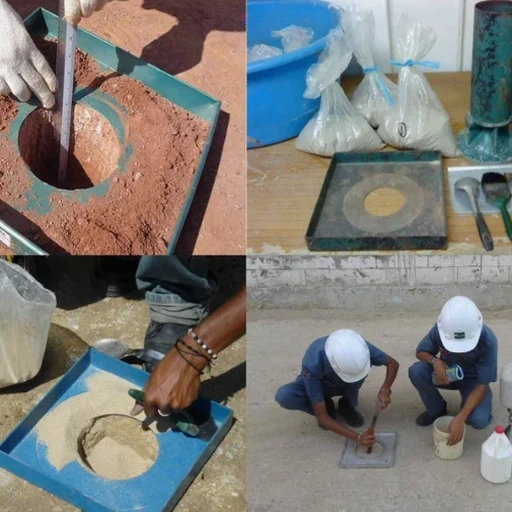
Under Eurocode 7 and BS EN 1997-1:2004, every pile foundation design in Cambridge must follow Design Approach 1, which requires checking both partial factor sets for ultimate limit state. The UK National Annex to BS EN 1997-1 is particularly strict about pile load testing requirements on sites with soft alluvium—and much of Cambridge sits squarely in that category. We routinely incorporate the guidance of BS 8004:2015 for concrete bored piles and the ICE Specification for Piling and Embedded Retaining Walls. For the peat lenses common in the Fen-edge suburbs like Chesterton and Milton, we often recommend supplementing the geotechnical investigation with a CPT test to obtain a continuous profile of tip resistance and sleeve friction, which helps identify exactly where the competent bearing layer begins. This is not about ticking boxes for building control; it is about producing a pile design that will not progressively settle over the first five winters of the building's life. Our laboratory is UKAS-accredited to ISO 17025 for the soil classification and strength tests that feed directly into the pile capacity calculations.
Pile Foundation Design in Cambridge: Engineering for Weak Fenland Soils
Technical reference — Cambridge

Local considerations

We have seen too many projects in Cambridge where the ground investigation stopped at six metres, the designer assumed a uniform clay profile, and the piles were terminated in what turned out to be a dense silt lens—with soft organic clay another two metres below. The piles carried the load fine for the first year, but differential settlement began to appear in the superstructure by the second winter. In areas near the Backs and along the Cam floodplain, the combination of a shallow water table and compressible alluvium creates a genuine negative skin friction risk: as the surrounding soil consolidates, it drags down on the pile shaft, adding load that the original design never accounted for. A proper pile foundation design for these conditions must include a detailed assessment of downdrag forces and, where necessary, a bitumen coating or permanent sleeve through the settling zone. The cost of these measures is negligible compared to the cost of underpinning a settled structure later.

Need a geotechnical assessment?

Reply within 24h.

Email: contact@geotechnical-engineering1.com

Regulatory framework

BS EN 1997-1:2004 (Eurocode 7: Geotechnical design – General rules), BS 8004:2015 (Code of practice for foundations), BS EN 22477-1:2018 (Geotechnical investigation and testing – Static pile load tests), ICE Specification for Piling and Embedded Retaining Walls (3rd edition), BS 5930:2015 (Code of practice for ground investigations)

Typical values

ParameterTypical value
Design standardBS EN 1997-1:2004 (Eurocode 7) with UK National Annex
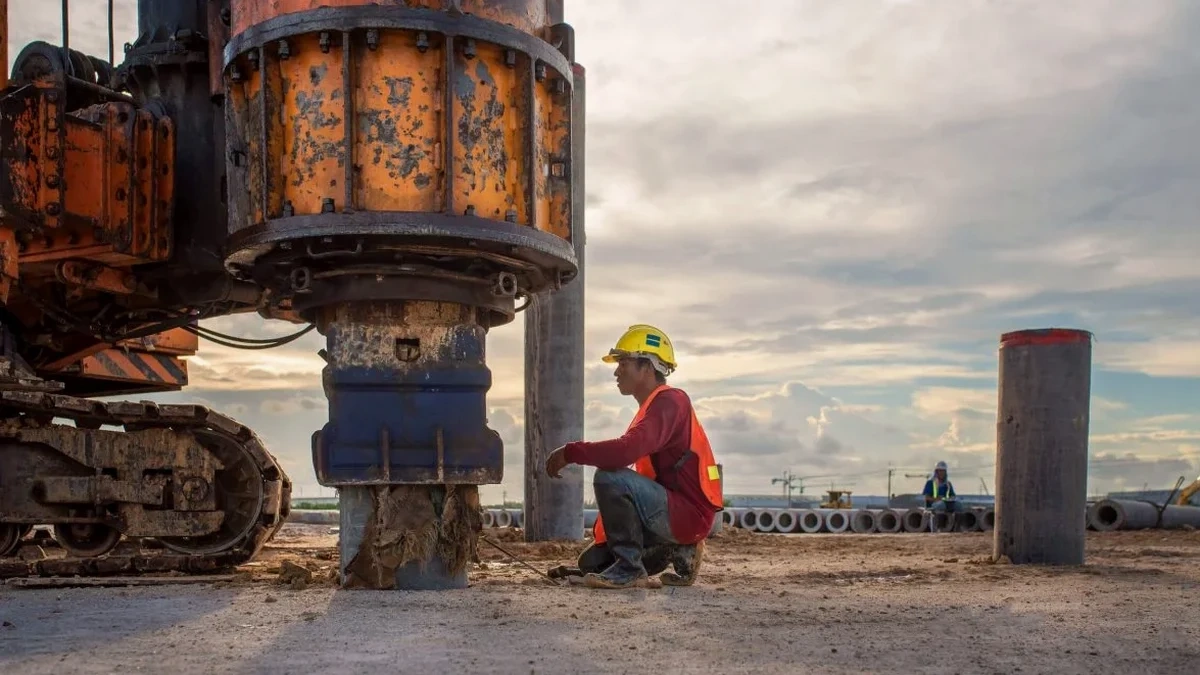
Pile types designedCFA, rotary bored, driven precast, mini-piles
Typical pile diameters in Cambridge300 mm to 900 mm (bored); 150 mm to 300 mm (mini-piles)
Design approachDA1 (Combinations 1 and 2) per UK NA
Bearing stratum in central CambridgeGault Clay (undrained shear strength 80-150 kPa typical)
Groundwater considerationHigh water table in terrace gravels; permanent casing often required
Settlement analysis methodT-z curves and equivalent raft method for pile groups
Load test specificationStatic maintained load test to BS EN 22477-1:2018

Questions and answers

What depth of ground investigation is needed before a pile design can proceed in Cambridge?

BS EN 1997-2 and BS 5930 require exploratory holes to extend at least five pile diameters below the anticipated toe level, or into a proven competent stratum. In Cambridge, where the Gault Clay surface can vary by several metres across a site, we typically recommend rotary boreholes to 20–25 metres with SPTs and undisturbed sampling at regular intervals to capture the transition from superficial deposits into the Jurassic clays.

How much does a pile foundation design package cost for a typical Cambridge residential project?

For a single-storey extension or a small new-build house requiring four to six piles, a complete design package—including geotechnical parameter review, pile capacity calculations, settlement analysis, and a pile schedule ready for the contractor—typically falls between £1,430 and £4,760, depending on the complexity of the ground profile and whether pile load testing is included.

Do you handle the pile installation supervision as well as the design?

We provide technical oversight during installation, including site visits to verify that the ground conditions encountered match the design assumptions. If the borehole logs show a peat layer at 4.5 metres but the piling rig hits it at 5.8 metres, we adjust the pile lengths immediately rather than waiting for a problem to emerge later.

Is CFA piling suitable for the soft ground conditions in Cambridge?

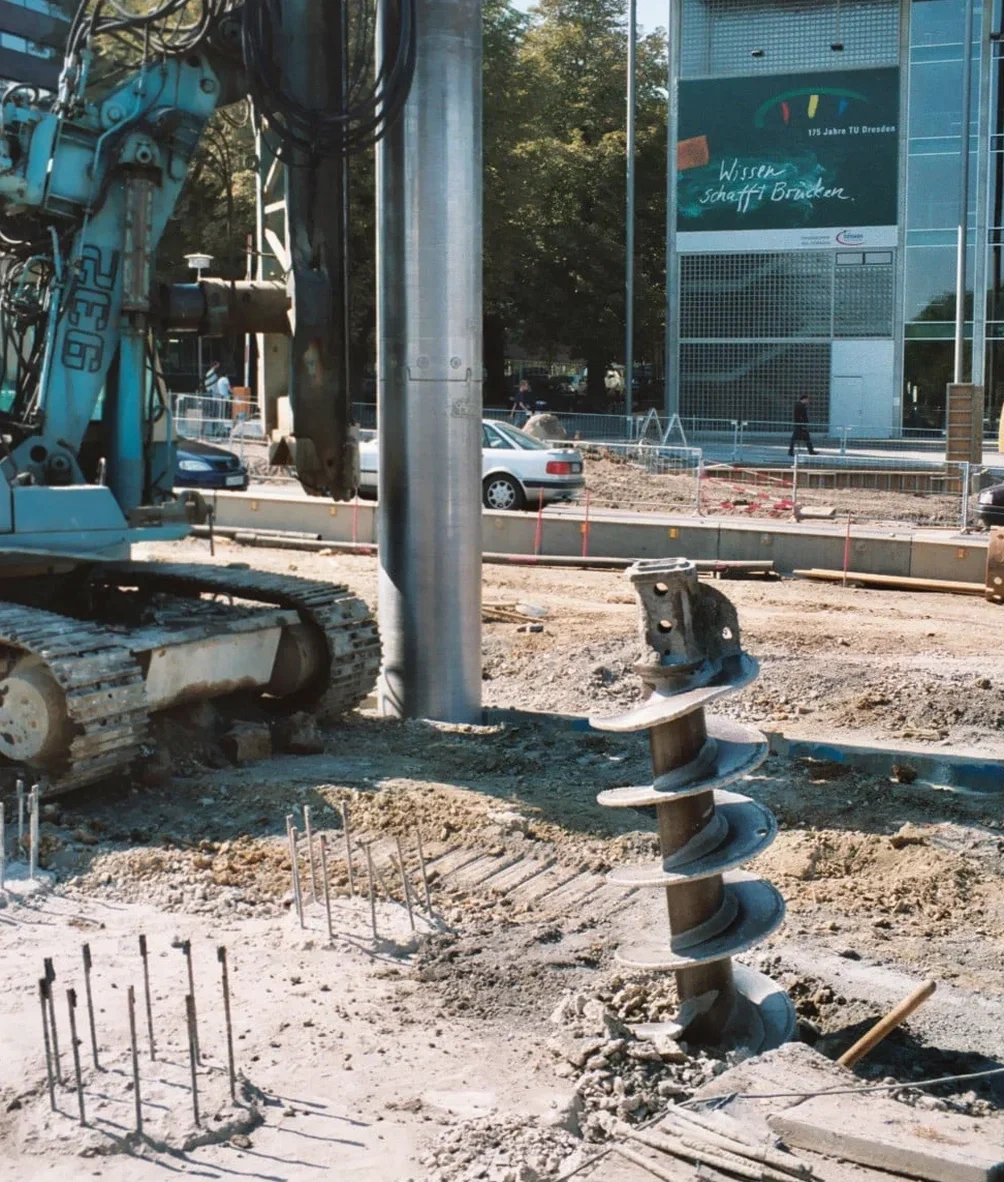
Continuous Flight Auger piling is widely used across Cambridge and works well in the alluvial clays, provided the pile toe is seated into competent Gault Clay or Kimmeridge Clay. The key is achieving sufficient penetration into the bearing stratum—typically at least three pile diameters—and verifying through spoil inspection that the auger has not terminated prematurely in a dense gravel lens.

Location and service area

We serve projects in Cambridge and surrounding areas. More info.

View larger map